1.5 Size names around the world
The same stone can be sold as 16–32, as 16/31.5, as US No. 4 or as "1¼ inch clean". This page lines the names up.
At a glance
- EN size
- Two sieves in mm, smaller first: 16/31.5. This handbook writes it 16–32.
- US size number
- A grading band from ASTM D448, such as No. 57 for about 4.75–25 mm.
- With fines
- A size starting at 0, or gravel sold with its crushing fines left in. Compacts.
- "Clean"
- Washed to remove the fines. Clean rock will not compact tightly.
Why the names do not line up
Sieves double at each step: 1, 2, 4, 8, 16, 31.5 and 63 mm, with optional sieves in between. A size names its two sieves.
Sieves follow inch fractions above ¼ in and mesh numbers below it. A size number names a whole grading band, not two sieves.
Size names nearest match, not exact
| This handbook | EN | US size number, mm | Inches |
|---|---|---|---|
| 0–2 | 0/2 | – | 0–5⁄64 in |
| 0–4 | 0/4 | Concrete sand (ASTM C33) | 0–5⁄32 in |
| 2–5 | 2/5.6 | No. 9 (1.18–4.75) | 5⁄64–7⁄32 in |
| 4–8 | 4/8 | No. 8 (2.36–9.5) | 5⁄32–5⁄16 in |
| 8–16 | 8/16 | No. 6 (9.5–19) | 5⁄16–⅝ in |
| 4–22 | 4/22.4 | No. 57 (4.75–25) | 5⁄32–⅞ in |
| 16–32 | 16/31.5 | No. 4 (19–37.5) | ⅝–1¼ in |
| 32–63 | 31.5/63 | No. 2 (37.5–63) | 1¼–2½ in |
| 0–16 | 0/16 | – | 0–⅝ in |
| 0–32 | 0/31.5 | – | 0–1¼ in |
| 0–63 | 0/63 | – | 0–2½ in |
Sieve openings same opening, two names
| Opening, mm | EN sieve | US sieve (ASTM E11) |
|---|---|---|
| 0.063 | Yes, fines limit | No. 230 |
| 0.075 | – | No. 200, US fines limit |
| 0.125 | Yes | No. 120 |
| 0.25 | Yes | No. 60 |
| 0.5 | Yes | No. 35 |
| 1 | Yes | No. 18 |
| 2 | Yes | No. 10 |
| 2.36 | – | No. 8 |
| 4 | Yes | No. 5 |
| 4.75 | – | No. 4 |
| 5.6 | Set 1 | No. 3½ |
| 8 | Yes | 5⁄16 in |
| 9.5 | – | ⅜ in |
| 11.2 | Set 1 | 7⁄16 in |
| 12.5 | Set 2 | ½ in |
| 16 | Yes | ⅝ in |
| 19 | – | ¾ in |
| 22.4 | Set 1 | ⅞ in |
| 25 | – | 1 in |
| 31.5 | Yes, written 32 | 1¼ in |
| 37.5 | – | 1½ in |
| 63 | Yes | 2½ in |
Step by step: translate a size you are given
-
1
Find the largest grain in mm.
That is what decides whether the material fits the layer. Use the tables above to turn inches or a size number into mm.
The largest stone against a ruler -
2
Find the bottom of the size.
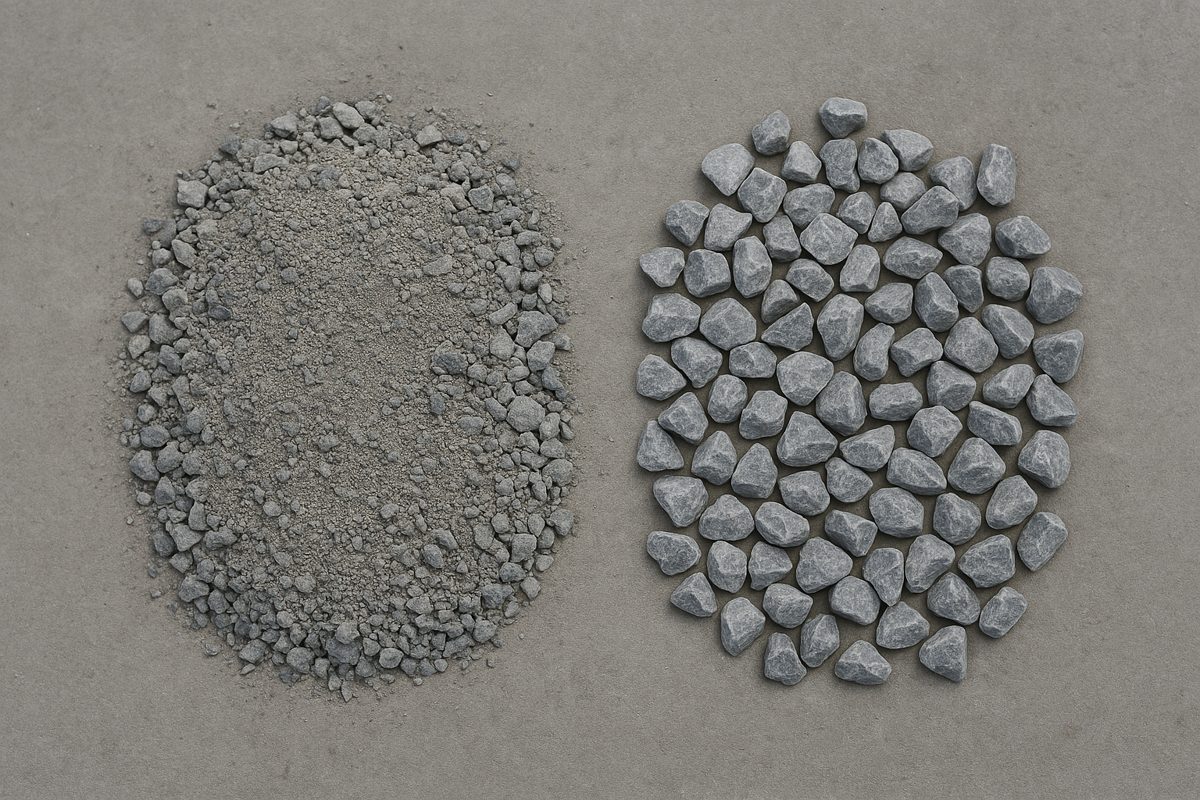
"All-in" and a size starting at 0 mean fines are in. "Clean", "washed" and a size starting above 0 mean they are out. Other trade words vary, so ask.
Stone with fines and clean stone side by side Illustration -
3
When it is close, ask for the grading sheet.
A grading sheet lists the percentage passing each sieve. Compare it with the sizes in the tables above.
A supplier's grading curve
Specifications
US size numbers
ASTM D448 lists standard sizes by number. Single numbers are narrow bands, such as No. 6 for 19–9.5 mm. Two-digit numbers are wider bands, such as No. 57 for 25–4.75 mm and No. 67 for 19–4.75 mm.
Upper size
In both systems a few grains may be larger than the upper size. EN 12620 allows up to 15 % over D for most stone. For US No. 57, 95–100 % passes the 25 mm sieve and all of it passes 37.5 mm.
Rounded labels
EN 12620 lets 31.5 mm be written 32, so 16/31.5 is sold as 16/32. This handbook writes 2/5.6 as 2–5 in the same way. Check the declared size on the delivery note.
Same sieves, two names
The US sieve table lists each opening in mm next to its US number, so a 2 mm EN sieve and a US No. 10 sieve are the same. The two systems pick different sieves from one series.
Sources
- ASTM D448-12 (copy published by the Government of Bermuda): size numbers No. 2, 4, 57, 6, 67, 8, 9 and their sieve limits
- FDOT Standard Specifications, Section 901: No. 57 grading, 100 % passing 1½ in, 95–100 % passing 1 in
- NIST Special Publication 960-1, Table 3.1: ASTM E11 sieve numbers and their openings in mm
- EN 12620:2002+A1:2008: basic sieve set plus set 1 or set 2, 31,5 (32), grading limits
- ASTM C33-03: fine aggregate for concrete, fines on the 75 µm sieve
- Washington State Department of Ecology: "clean" crushed rock is washed to remove fine material and will not tightly compact
US size numbers are the nearest match by sieve opening, not exact equivalents. Inches are a straight conversion of the mm sizes.
GLAREUM.NET · Aggregate Handbook