1.1 Reading a sieve size
A size such as 8–16 names two sieve openings in millimeters. The material passes through the larger sieve and stays on the smaller one.
At a glance
- First number
- The smaller sieve. Grains below it are removed. 0 means nothing is removed, down to dust.
- Second number
- The larger sieve, the largest grain. It decides how thin a layer the material fits in.
- Starts at 0
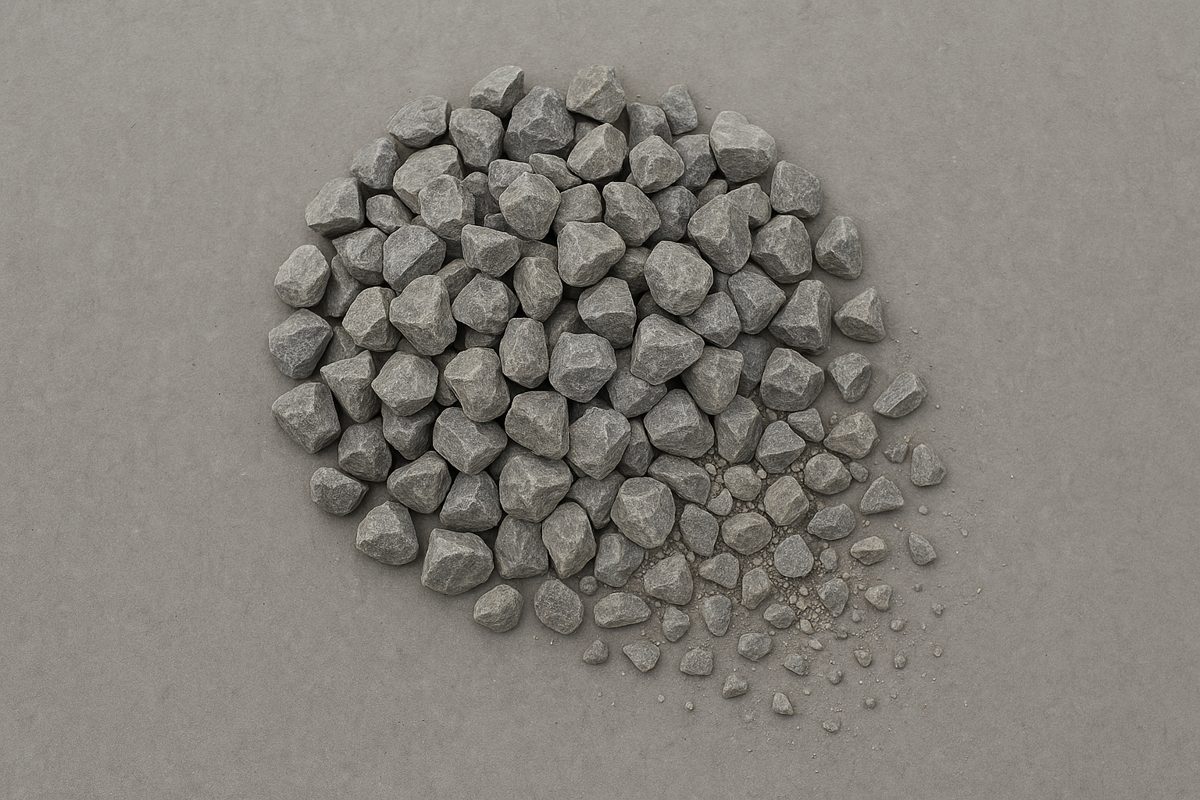
- Graded, with fines. Compacts hard and holds water. For bases and fill.
- Starts above 0
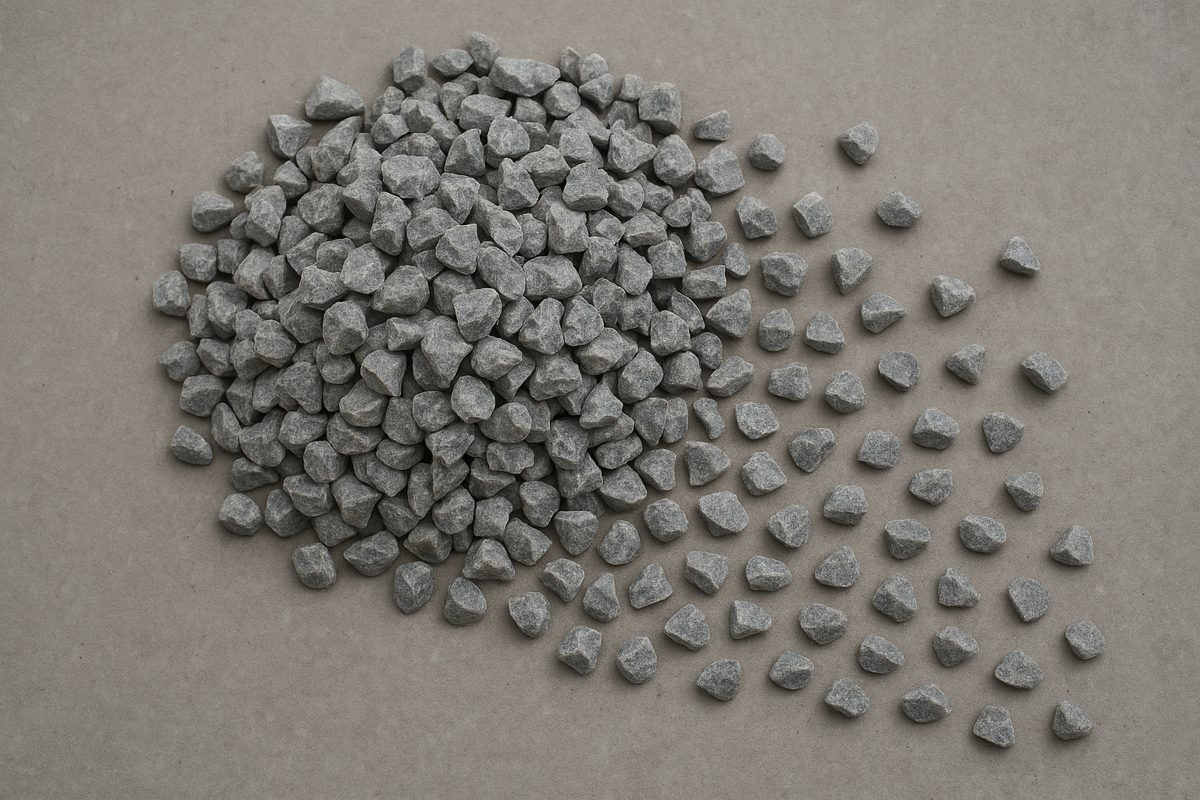
- No fines, open gaps. Drains and does not compact much. For drainage and concrete stone.
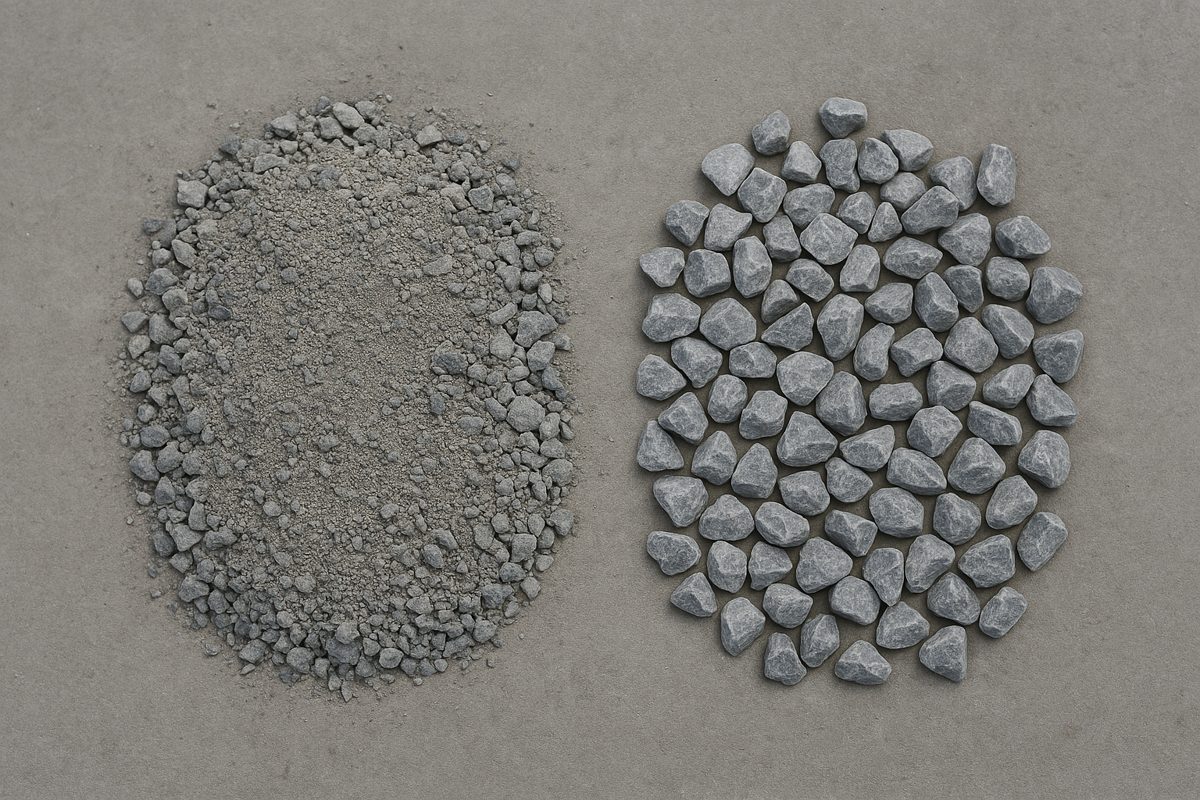
Why 0–16 or 8–16?
Everything from dust up to 16 mm. The small grains fill the gaps between the big ones, so it compacts into a hard, dense layer that carries load.
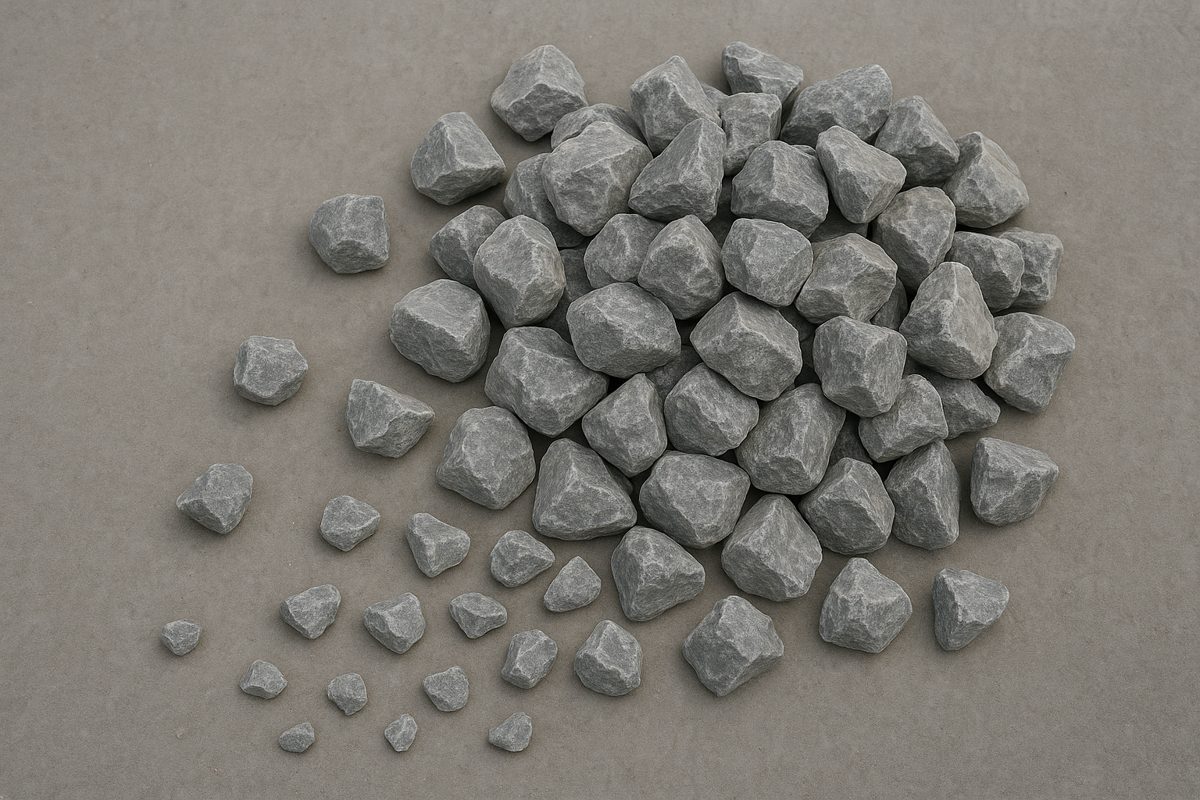
Only stones between 8 and 16 mm. About 30–40 % of the volume stays open, so water runs through.
Common sizes and where this handbook uses them
| Size | What it is | Used for |
|---|---|---|
| 0–2 mm | Fine sand | Thin mortar joints, render finish coat, paving joints |
| 0–4 mm | Sand | Concrete, mortar, screed, paving bed, pipe bedding |
| 2–5 mm | Grit | Paving bed, wide or permeable joints |
| 4–8 mm | Fine stone | Concrete for thin sections |
| 8–16 mm | Stone | Concrete, drainage, under posts |
| 16–32 mm | Coarse stone | Capillary break, drainage, footings |
| 32–63 mm | Very coarse stone | Soakaways, permeable subbase |
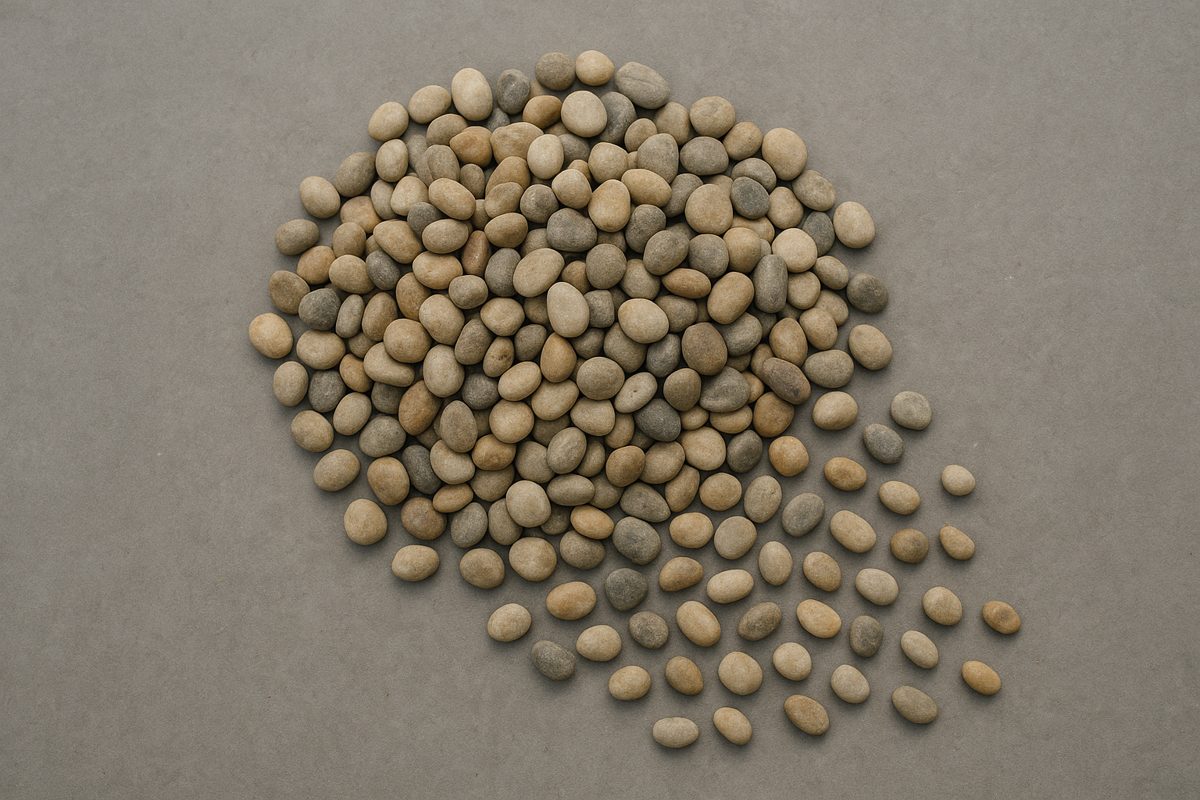
| 0–16 mm | All-in, crushed or rounded | Gravel surfaces, base under paths, all-in concrete aggregate |
| 0–32 mm | Crushed with fines | Bases, sub-bases, structural fill |
| 0–63 mm | Crushed with fines | Subbase under driveways, deep fill |
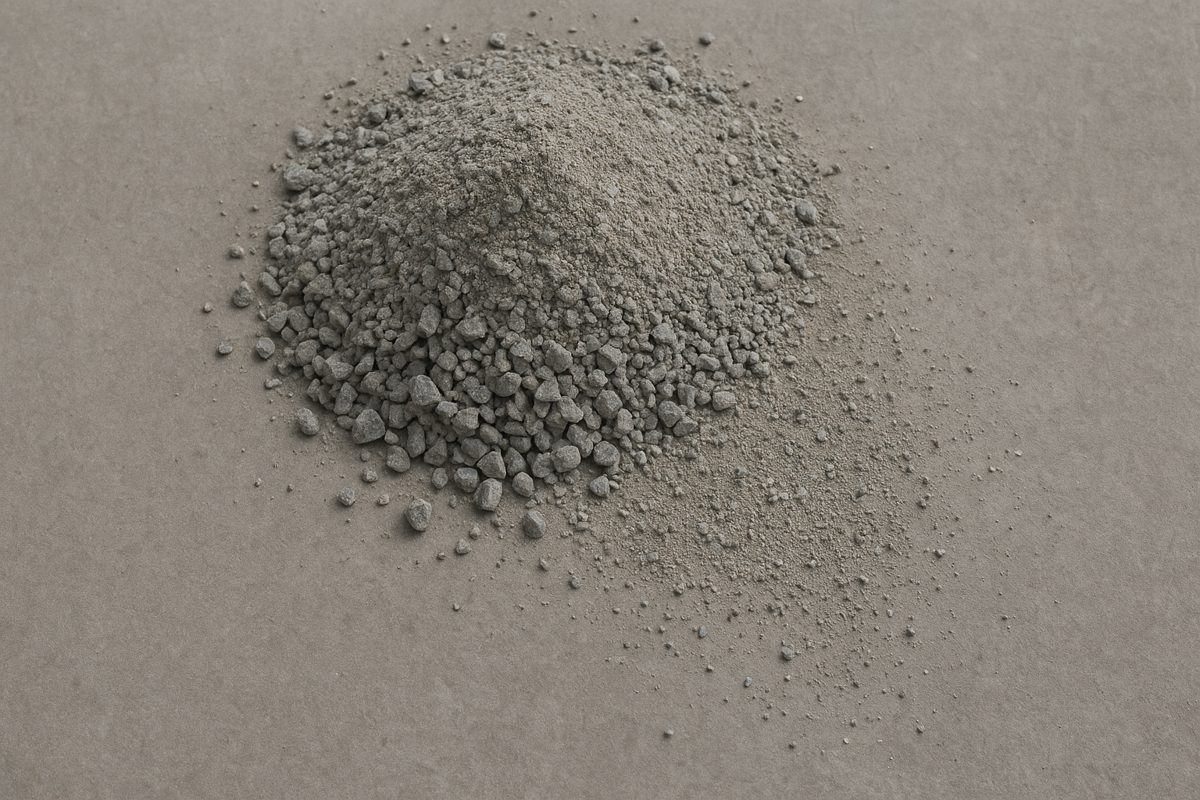
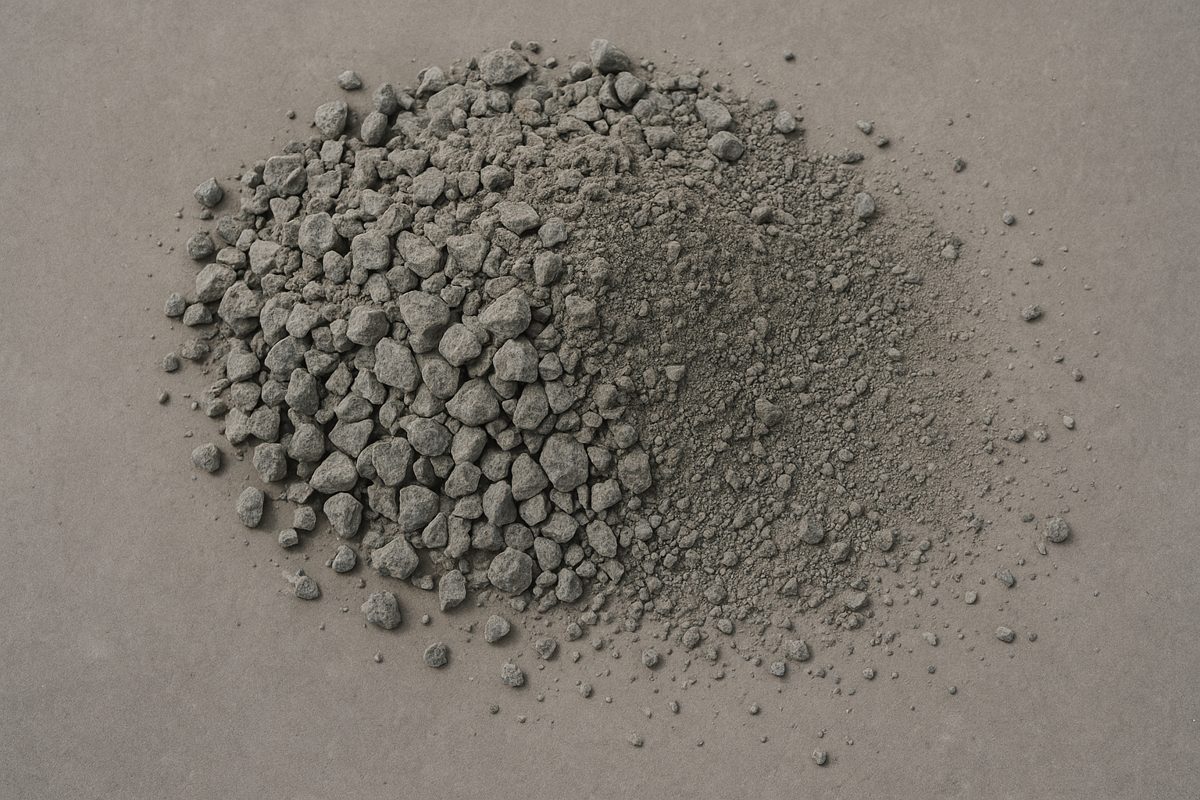
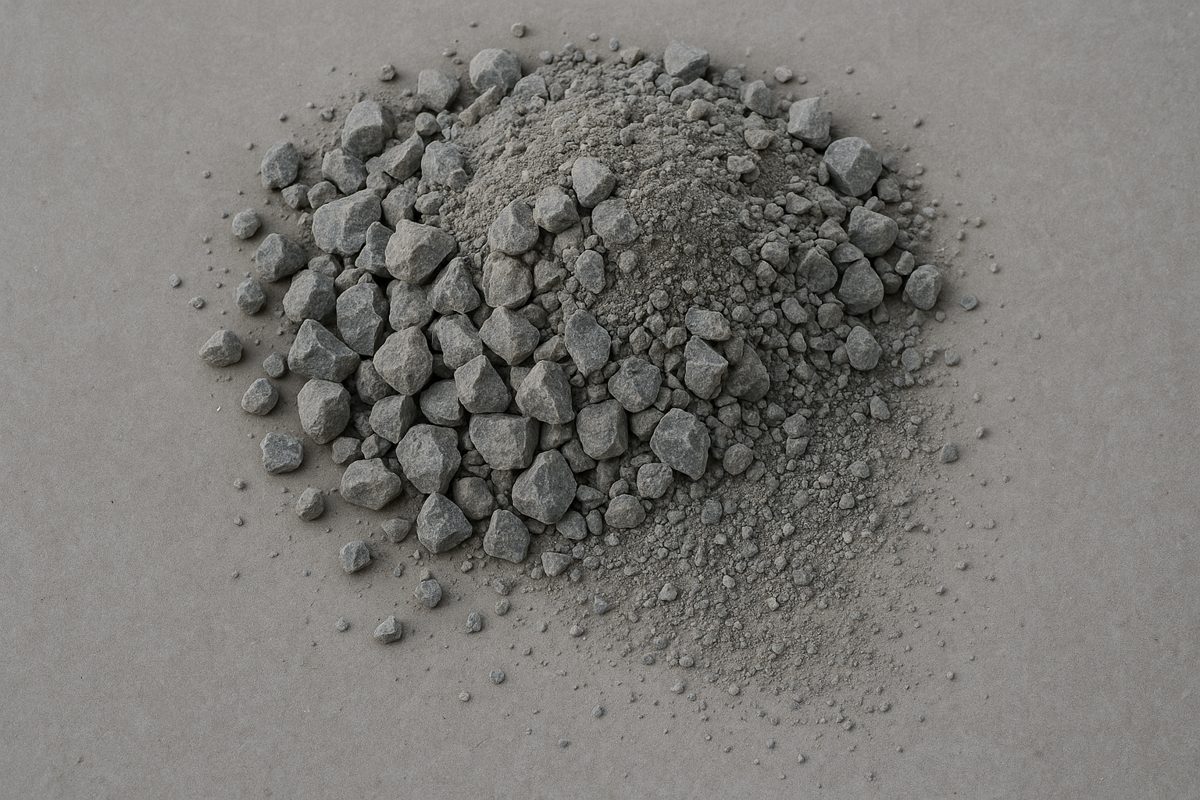
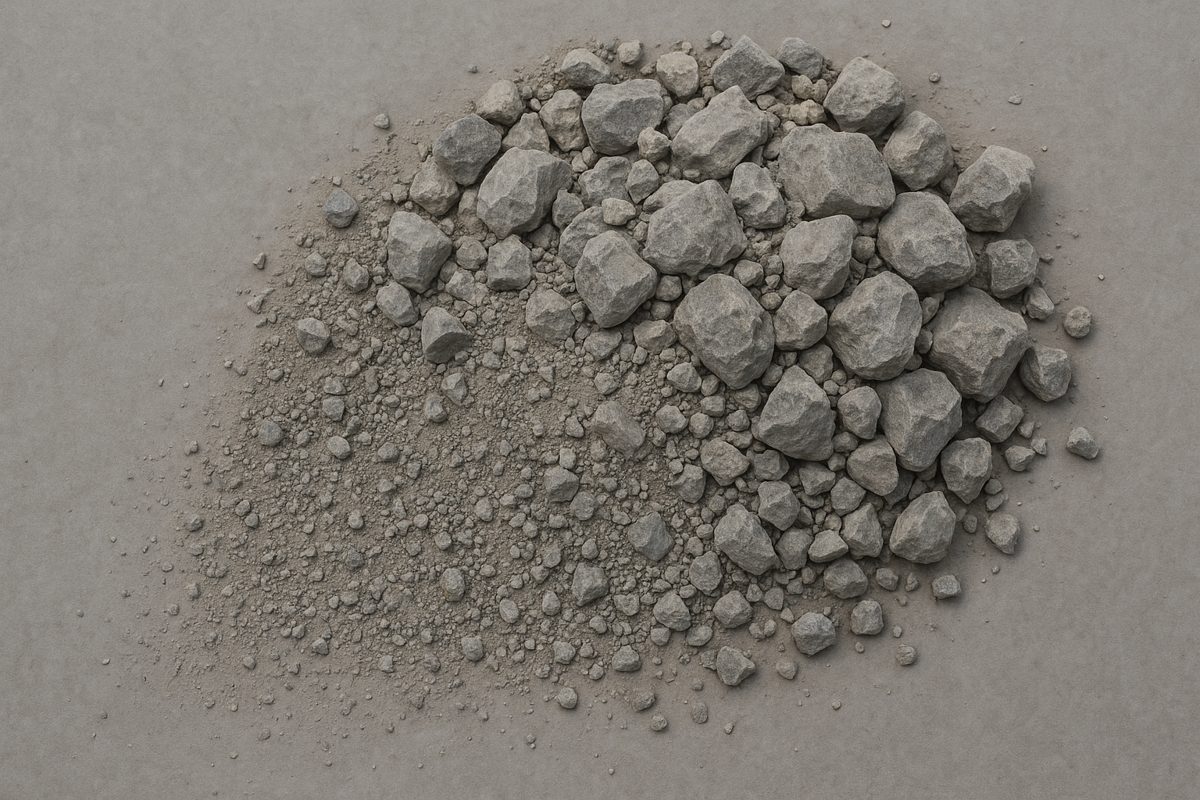
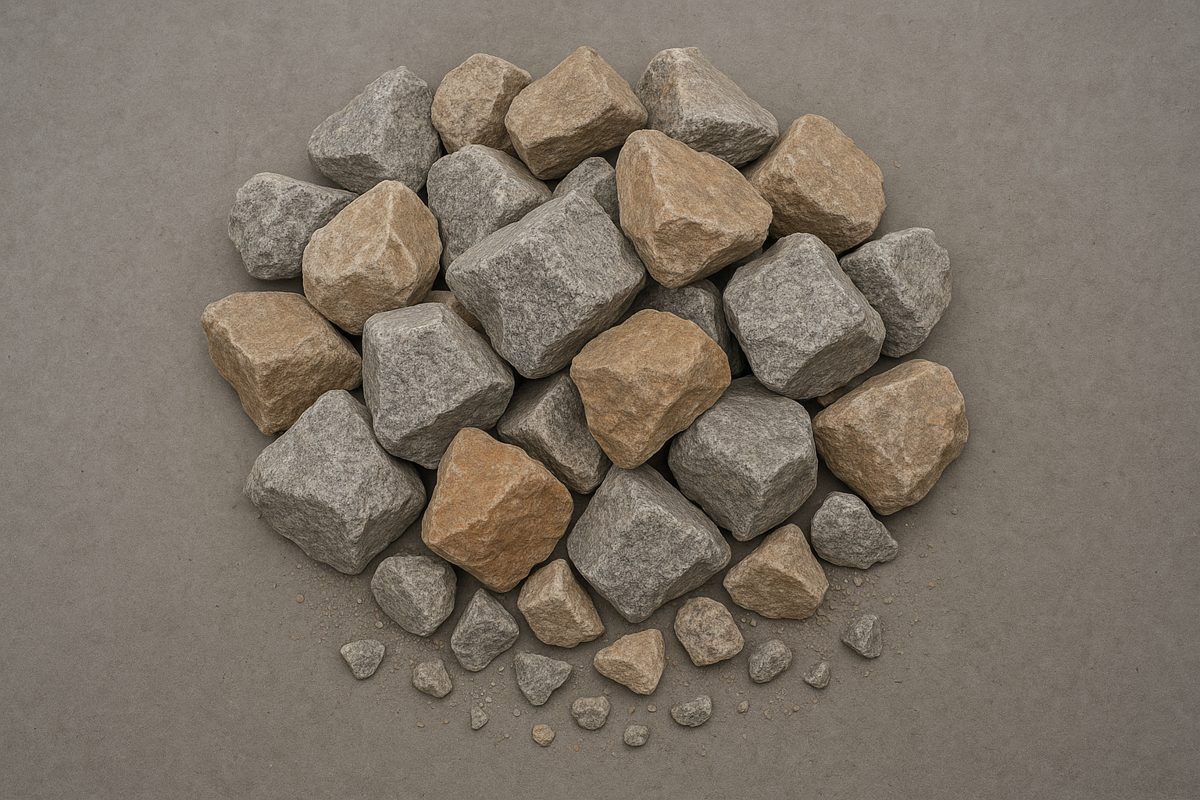
What each size looks like illustrations seen from above, not to the same scale
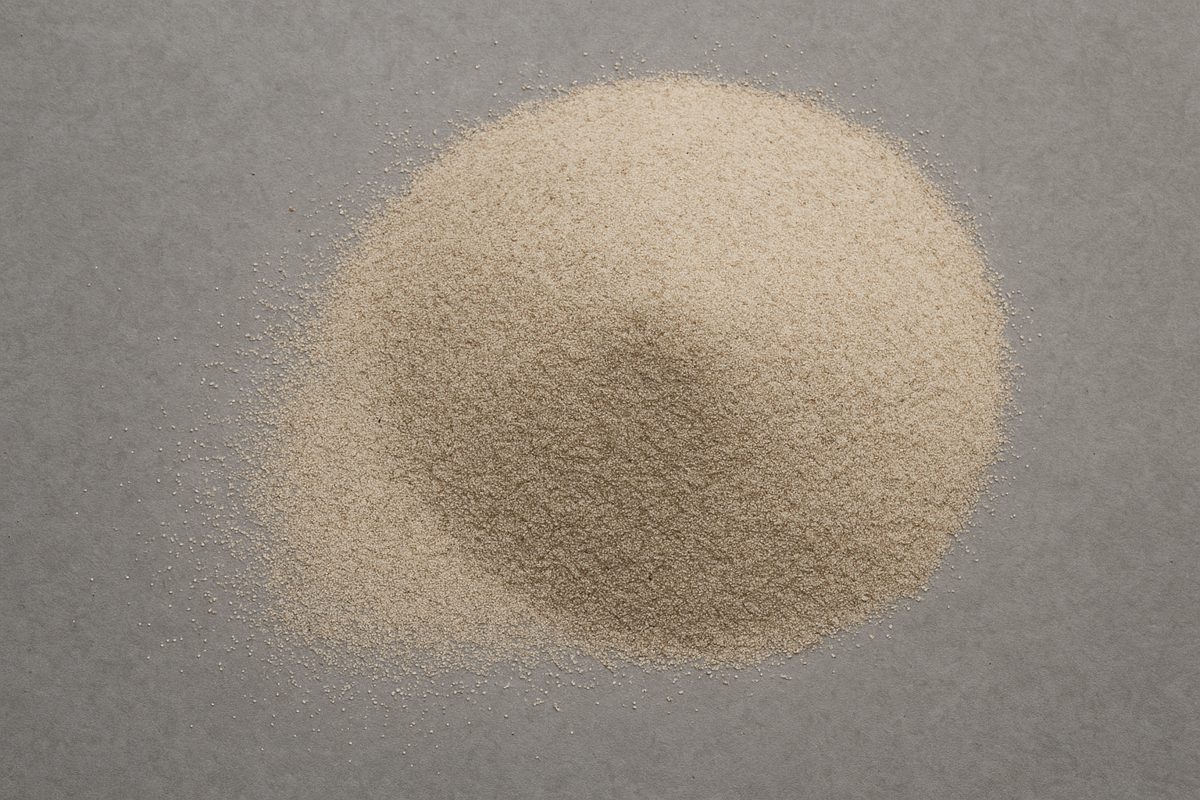
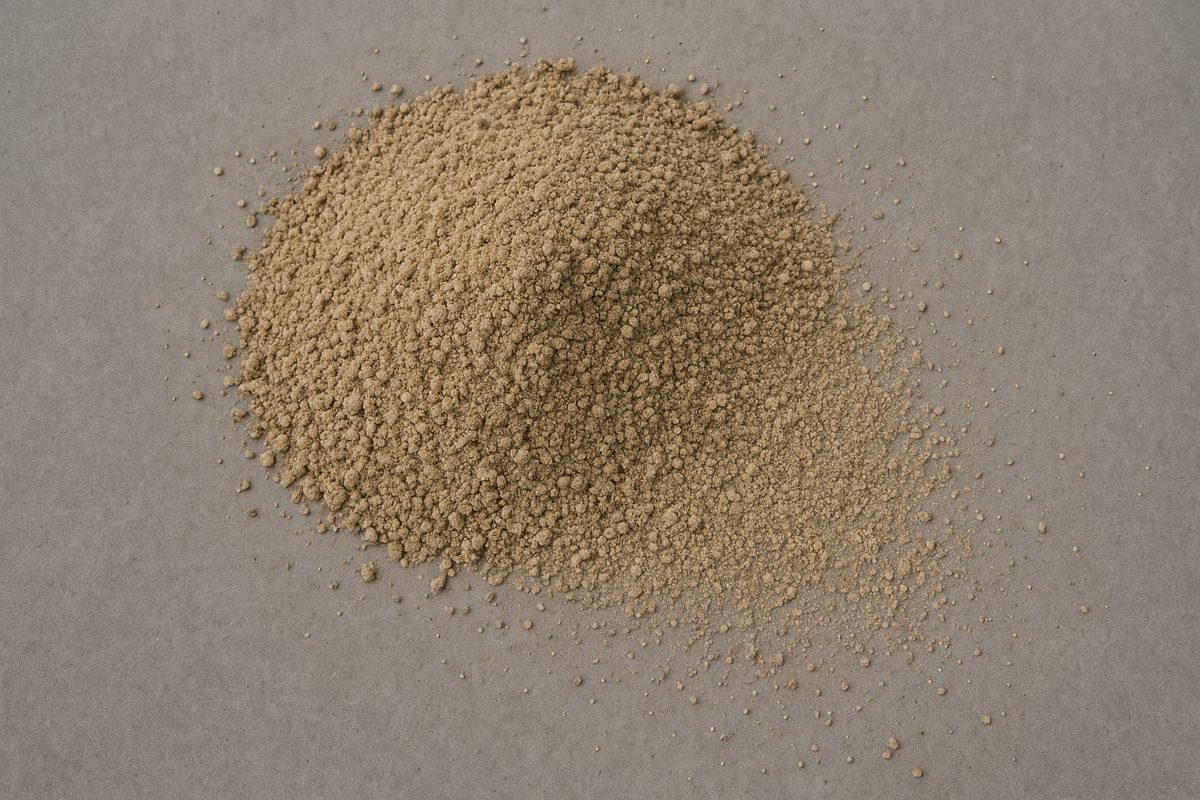
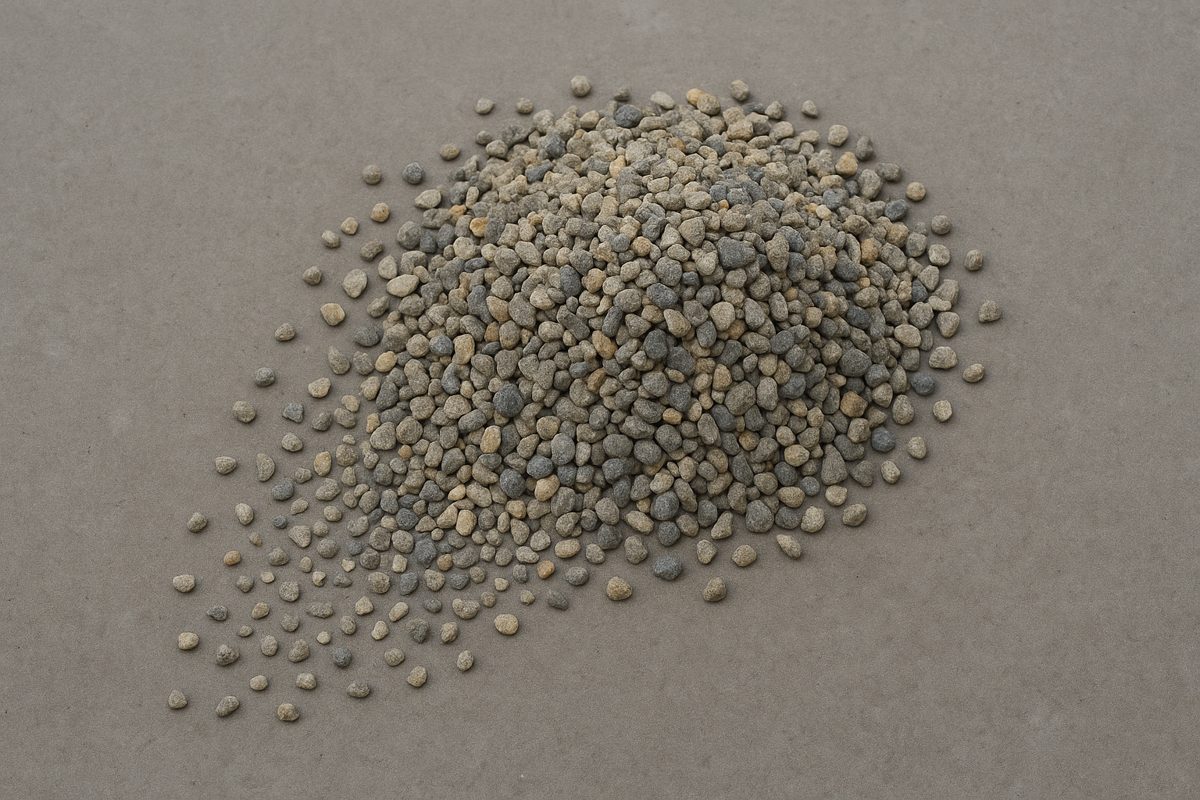
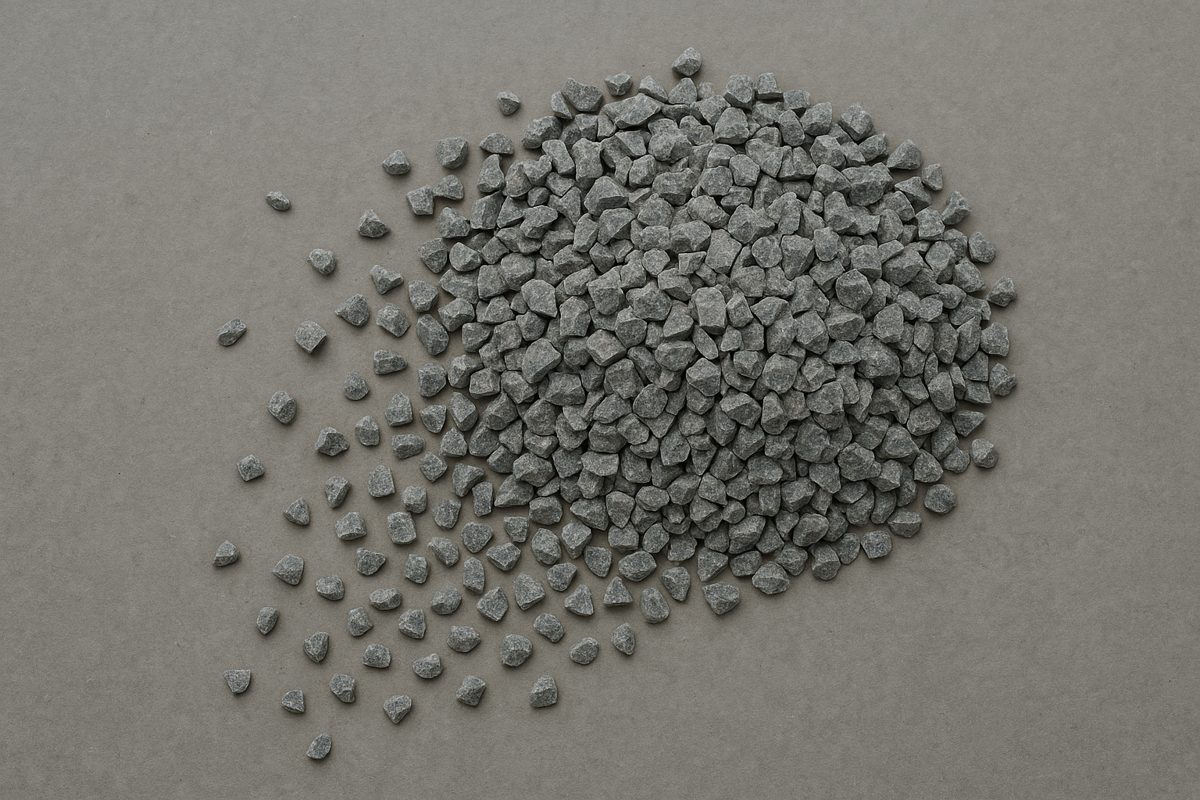
Step by step: read a size before you order
-
1
Check the second number against the layer.
Follow the ACI slab rule: keep the largest grain to no more than a third of the layer thickness. A 30 mm paving bed takes grains up to 10 mm, so 0–4 or 2–8 fits but 8–16 does not.
A thin layer next to a ruler -
2
Check the first number: 0 or not?
A 0 means fines are in. Choose it when the layer must compact and carry load. A number above 0 means the fines are out. Choose it when water must pass, or when cement must coat every stone.
0–16 and 8–16 side by side Illustration -
3
Read the words next to the size.
The size alone is not enough. Crushed or rounded (1.2) and washed or not (1.3) change how the same size behaves.
A product label with size, shape and washing
Specifications
How much over and under is allowed
For stone such as 8–16 or 16–32, EN 12620 requires 85–99 % to pass the upper sieve and at most 20 % to pass the lower sieve. At least 98 % must pass 1.4 times the upper sieve. So up to 15 % of an 8–16 can be a little over 16 mm, but almost nothing is over 22 mm. For sand such as 0–4, 85–99 % must pass 4 mm.
The sieve series
EN sizes use a fixed series of sieve openings that doubles at each step: 0.063, 0.125, 0.25, 0.5, 1, 2, 4, 8, 16, 31.5 and 63 mm. Producers may add in-between sieves from one of two sets: 5.6, 11.2, 22.4 and 45 mm, or 6.3, 10, 12.5, 14, 20 and 40 mm. EN 12620 lets 31.5 mm be written 32. The larger number must be at least 1.4 times the smaller one.
Sand, stone and all-in
EN 12620 calls a material fine aggregate when it starts at 0 and stops at 4 mm or less, and coarse aggregate when it stops at 4 mm or more and starts at 2 mm or more. All-in aggregate starts at 0 and stops at 45 mm or less.
Fines
Fines are the grains that pass the 0.063 mm sieve. US standards such as ASTM C33 use 0.075 mm (75 µm, the No. 200 sieve) instead. See 1.3.
Grading sheet
A grading sheet lists the percentage passing each sieve. That is how the limits above are checked.
Sources
- EN 12620:2002+A1:2008 Aggregates for concrete: clause 3 definitions, clause 4.2 and Table 1 (sieve sets, D/d ≥ 1.4, 31.5 written 32), Table 2 (grading categories GC85/20 and GF85)
- EN 12620 overview slides, Spanish Ministry of Public Works: fine aggregate D ≤ 4 mm and d = 0; all-in D ≤ 45 mm and d = 0
- Oregon State University Extension EM 9204, Soakage trenches: washed, uniformly graded storage rock has about 40 % pore space
- University of Kentucky Cooperative Extension AEN-108, Permeable pavement for stormwater management: void space in the clean stone reservoir typically 30–40 %
- ACI 318-19 §26.4.2.1 (ACI FAQ): largest stone no more than ⅓ of slab depth, applied here to any layer
- ACI Education Bulletin E1-07: fines limit in US standards measured on the 75 µm (No. 200) sieve
- Washington State Department of Ecology: gravel with crushing fines compacts; washed clean rock "will not tightly compact"
GLAREUM.NET · Aggregate Handbook