GLAREUM.NET
The aggregate handbook: which sand, gravel, stone and soil each building and garden job needs, by size and type. The same page works in any country: take the sizes to any stone yard and ask for them by name.
How to use this handbook
- Find your job in the chapters below. Each page is one broad job, such as casting a floor or laying a base.
- Read What you need: every material with its size in mm, written min–max, and its type.
- Read Why this size if you have a choice to make, then follow the numbered steps.
- Unsure what 0–4 or "washed" means? Start with chapter 1.
Sizes are sieve sizes in millimeters. Switch between metric and imperial units in the sidebar.
Start here
1 Basics
Every job in this handbook names a sieve size, a shape and whether the material is washed. These five short pages explain what those words mean and how much to order.
Ground and building materials
2 Groundwork, pipes and fill
Getting the ground right around and under everything else. Fill has to compact, so it needs fines. Frost protection must not hold water, so it needs few.
3 Bases and paving
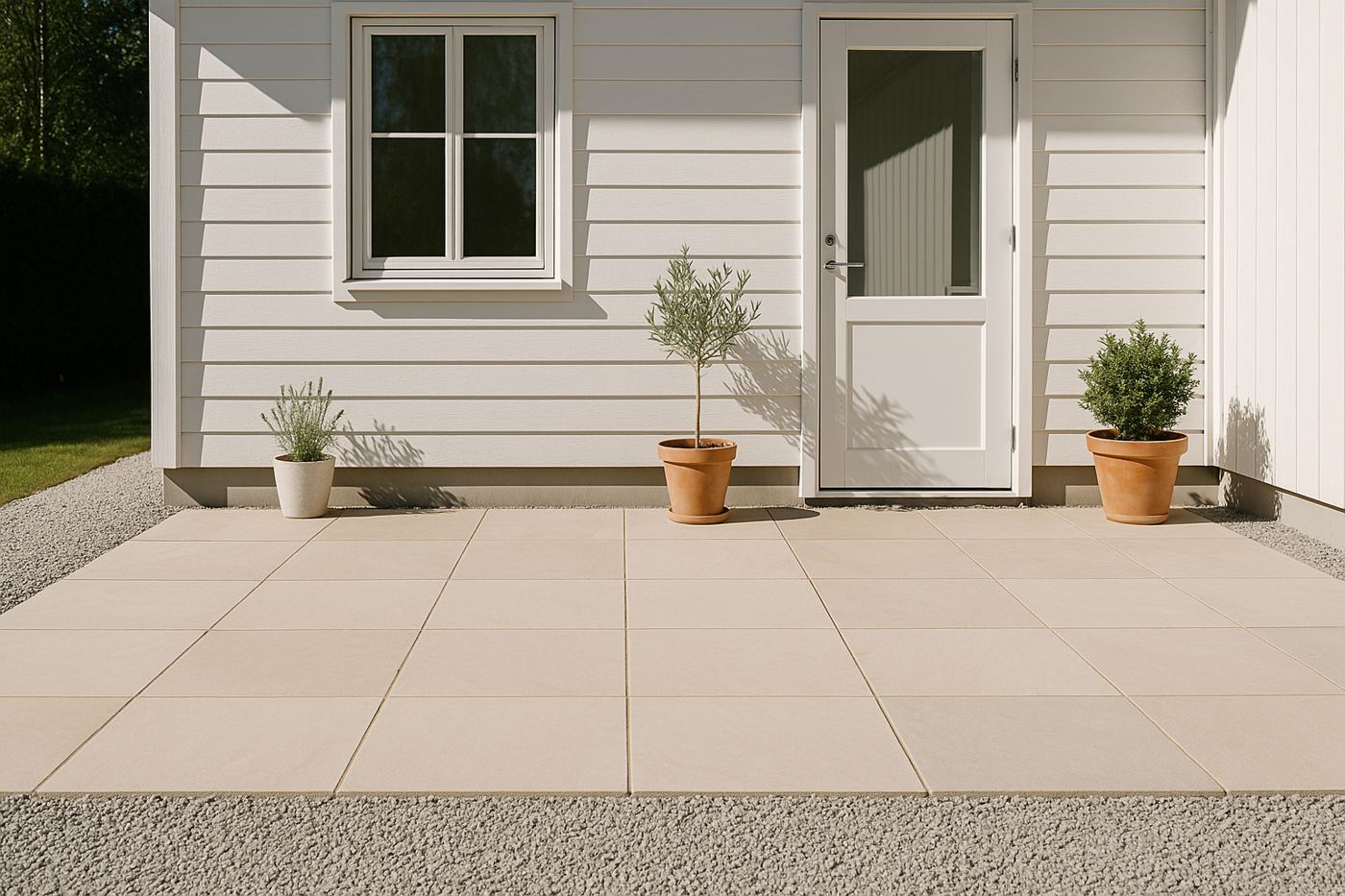
Crushed stone with fines, compacted in thin layers, and the sand that paving sits on. This chapter is about load: what sits on top, and how much stone it needs under it. Patios, driveways (chapter 7) and garden paths (chapter 8) all build on these pages.
4 Concrete
Washed sand plus washed stone, mixed with cement. Four jobs, one rule: use the biggest stone that fits.
5 Mortar, render and screed
Fine sand jobs. Washed sand with little clay, mixed with cement and often lime. The thinner the layer, the finer the sand.
6 Drainage and water
Clean, washed stone without fines. Six jobs about water: stopping it, passing it, storing it or filtering it.
Outdoor projects
7 Driveways and parking
The whole driveway job, from planning to upkeep, with the top layer in focus: loose gravel, compacted gravel, gravel grids, grass grids, block paving and concrete. The stone underneath is in chapter 3.
8 Garden paths
Paths for feet, barrows and bikes in gardens and parks: loose gravel, self-binding gravel, decomposed granite and stepping stones, plus the edges and steps that keep them in place.
9 Garden walls and gabions
The base under a block retaining wall, and wire mesh baskets filled with stone (gabions): garden walls, low retaining walls, slim fences and screens, benches, planters and pillars. For gabions this chapter covers the stone, the base and the filling.
Garden
10 Garden soil
Soil for the garden side of a project: filling and leveling, lawns, trees and shrubs, flower beds, raised beds and leveling an old lawn. Topsoil goes where roots grow; subsoil does the bulk.
GLAREUM.NET · Aggregate Handbook